

API Himal: Where the Mountains Test You and the People Win Your Heart

A trek to API Base Camp in Darchula brought snow, altitude sickness and five precious minutes of mountain views — and a reminder of how much far-western Nepal has to offer.
By Prashant Roshyara

At about four in the morning, I got up and stepped outside the lodge at API Base Camp, mostly to see whether it was still snowing.
It wasn't. The clouds that had hidden the mountains for most of the previous day were gone. Thousands of stars filled the sky, and beneath them the Himalaya stood completely clear. For a moment I just stood there. Then I remembered I wasn't the only one who had walked three days for this, and I went back in to wake everyone up.
I don't say it lightly, but it may have been the most beautiful moment of my life.
A family visit becomes a trek
I had flown to Nepal from the United States to spend Tihar with my family. What started as a holiday visit turned into a trip to one of the most remarkable, and least visited, corners of the Nepal Himalaya.
Six of us went: my brother Tirtha Roshyara, his wife Puspa Awasthi, my niece Princi Joshi, Kalpana Joshi, Kapil Awasthi and me. None of us quite knew what we were getting into.
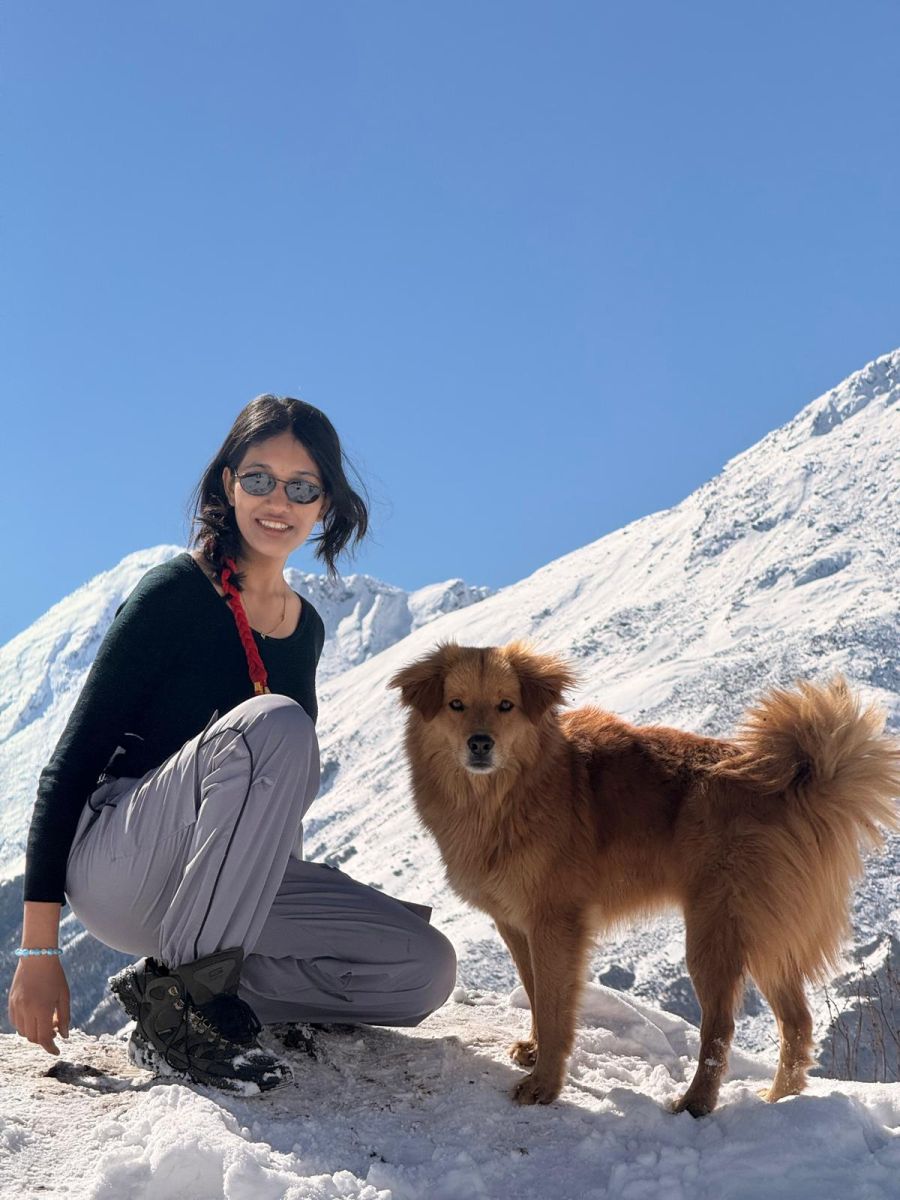 We drove from Dhangadhi towards Gokle Bazar in Darchula, passing through Dadeldhura and Baitadi, with snow peaks on the horizon for much of the way. Baitadi surprised me. I kept staring out the window at its hills and villages, thinking I could easily spend a week there. I mean to go back.
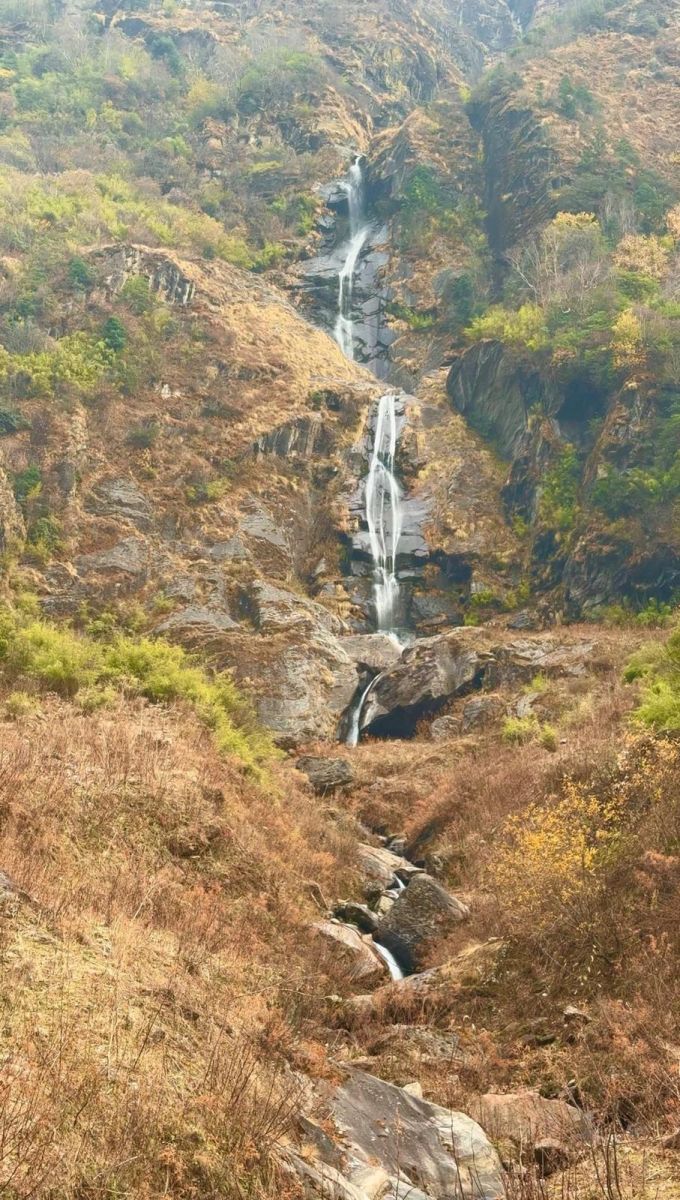
At Gokle Bazar we hired a Mahindra Bolero to Kafaldhar, where we ate lunch beside a waterfall. That was where the driving stopped and the walking started.
The trail wasted no time. Ghusa Ko Ukalo, a steep, punishing climb, let us know early what kind of trek this would be. We kept a steady pace, reminding each other it was only day one, and pushed on towards Sithi village.
That night we stayed at Krish Homestay. Dinner was roti, dal bhat, tarkari, homemade chutney and pure buffalo ghee. After a day like that, it tasted better than anything. I sat down with the owner for an interview, and the way he spoke about his guests gave me the first hint of what would become the real story of this trip.
Walking with the Chaulani
The Chaulani River woke us on the second morning. You hear it long before you see it. For most of the day we walked beside it as its clear water squeezed through narrow channels and slammed into boulders, gathering smaller streams as it went.
Waterfalls kept appearing around bends. We stopped so often for photos and videos that I'm still not sure how we covered any distance.
At Chirchire, where we stopped for lunch, there was internet. I'll admit we pounced on it. After a day and a half without a reliable signal, we were desperate to share what we had seen. Lunch was changra ko sukuti with local chutney, and it was excellent.
Somewhere on that stretch, I noticed something had changed in me. Back in the US, my days are full of meetings, deadlines and notifications. Out here there was none of that, just the river, the trail and people I love. It felt close to heaven.
We reached Bhalle Khola around 8:30 that night, tired and cold. The homestay owners had a campfire waiting. Their facilities are basic; they are running a business a very long way from anywhere. But they did everything they could to keep us warm. Whatever this route lacks in infrastructure, its people make up for.
Snow
On the third morning at Bhalle Khola, we woke to heavy snowfall.
It didn't take long for everything to turn white. Dark clouds sat over the peaks. Nobody said it out loud at first, but we were all thinking the same thing: should we keep going? We had limited supplies, and the conditions were far from safe.
We waited several hours, watching the sky. In the end we chose to go on, knowing the risks. We hadn't come this far to turn back, and all any of us wanted was one look at API.
Walking through snow on a buried trail felt unreal. The weather only got worse as we climbed. Then, a little before Base Camp, the clouds pulled apart. The sun came through, and for roughly five minutes, there they were: API Himal and Babai Himal.
I still can't describe that moment properly. After hours of not knowing, we felt as if we had won the world. I was convinced it would be our only view of the mountains on the entire trip.
 We crossed Dhauli Odar and stopped for lunch at Green Hotel, where the service was excellent and the owner humble and welcoming. By evening we reached API Base Camp. Local people came to greet us, and Rakhesh Thakre Bhai walked us around, pointing out the peaks and explaining the landscape.
Instead of heading straight back, we decided to stay the night. Maybe the morning would bring clear skies and the full 360-degree panorama.
Music, medicine and a campfire
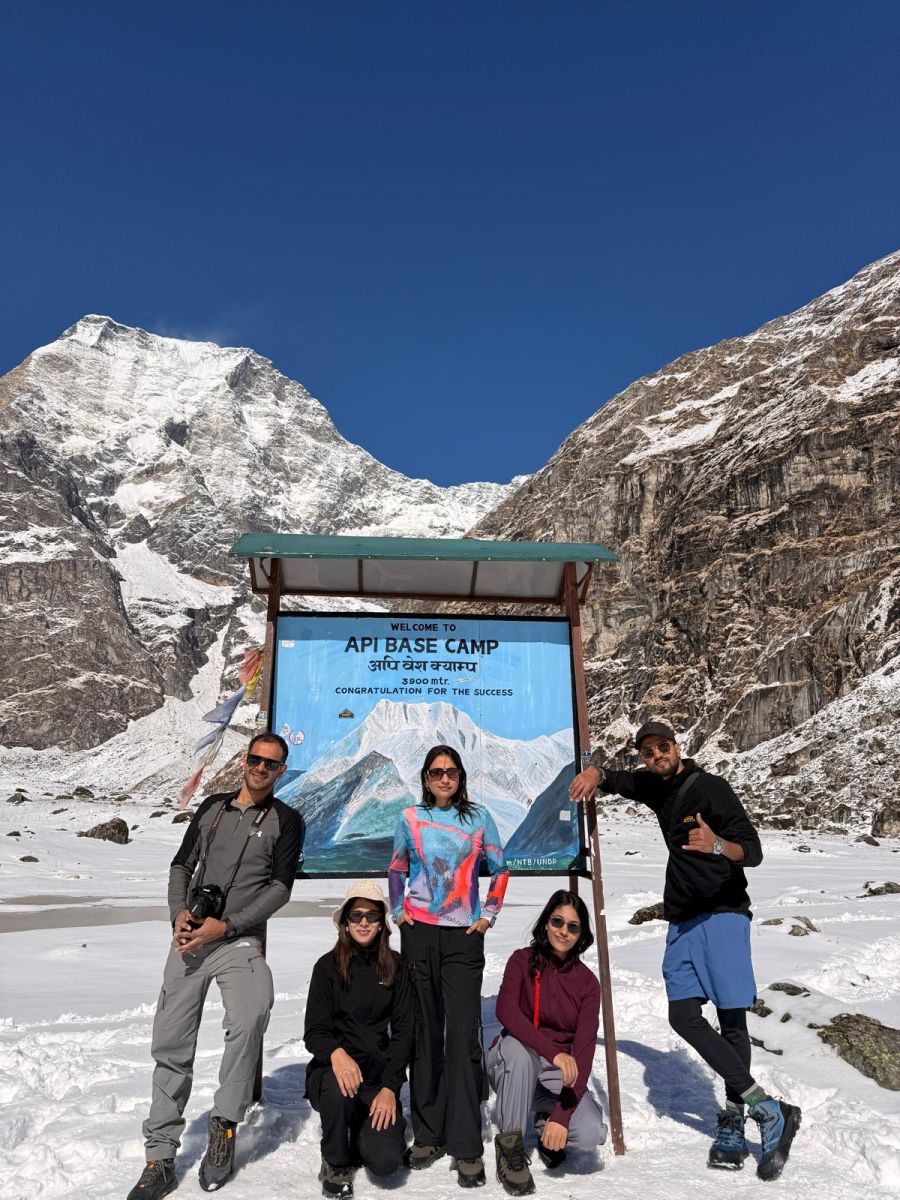
The night wasn't easy. Three of us developed symptoms of altitude sickness and took the medicine we had carried. Thankfully it worked, and they managed a few hours of sleep.
What I remember most, though, is the warmth. The local guides and hotel owners did everything they could to make us comfortable in a harsh place. There was food, local music, dancing and a fire, and for a few hours the cold didn't seem to matter.
Then came four o'clock, and the stars.
Once the others were up, we stood outside together as the sky began to lighten. The first sunlight touched the highest summits and slowly spread down across the snow. I didn't have words for it, and I don't think anyone else did either.
It felt as though API had tested us all of the previous day and had finally decided to let us in.
More than a viewpoint
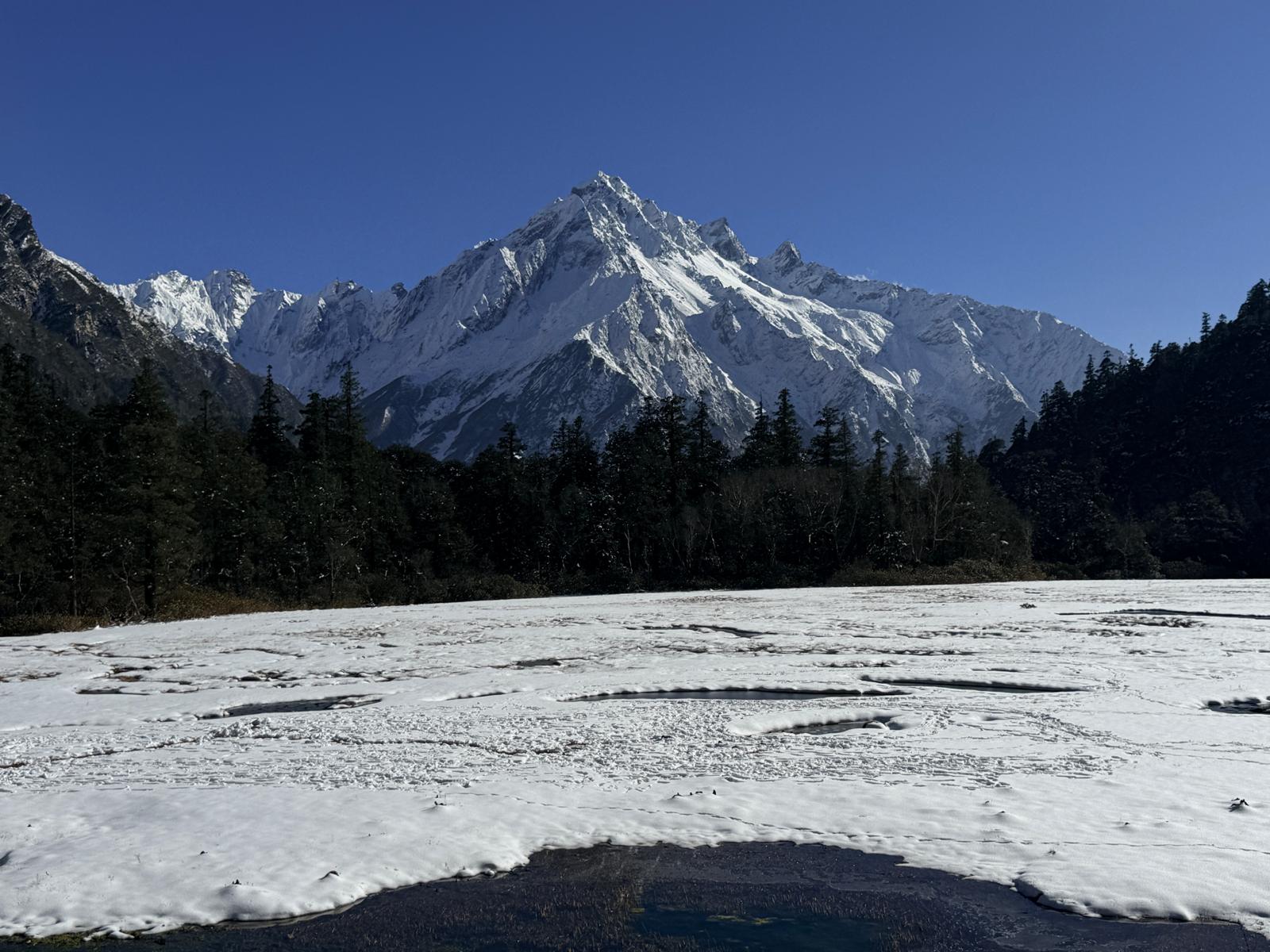 We spent several hours at Base Camp that morning, taking photographs and flying our drone.
One thing became clear to me: many trekkers come up, enjoy the main viewpoint and head back down. They miss a great deal.
The snow, above our knees in places, kept us from reaching Kalidhunga Tal and Rindgepani Taal, two lakes I had hoped to see. There is also a cricket ground at Base Camp, which was not something I expected to find up there.
The most remarkable thing was what we took to be the source of the Chaulani. Water bubbles up from the base of API and becomes the river that follows you up the whole trail. I put my hand in it and could feel it vibrating. I won't forget that.
If API is going to be promoted as a trekking destination, these places belong in the story. The viewpoint is only the beginning.
The mountain nobody told me about
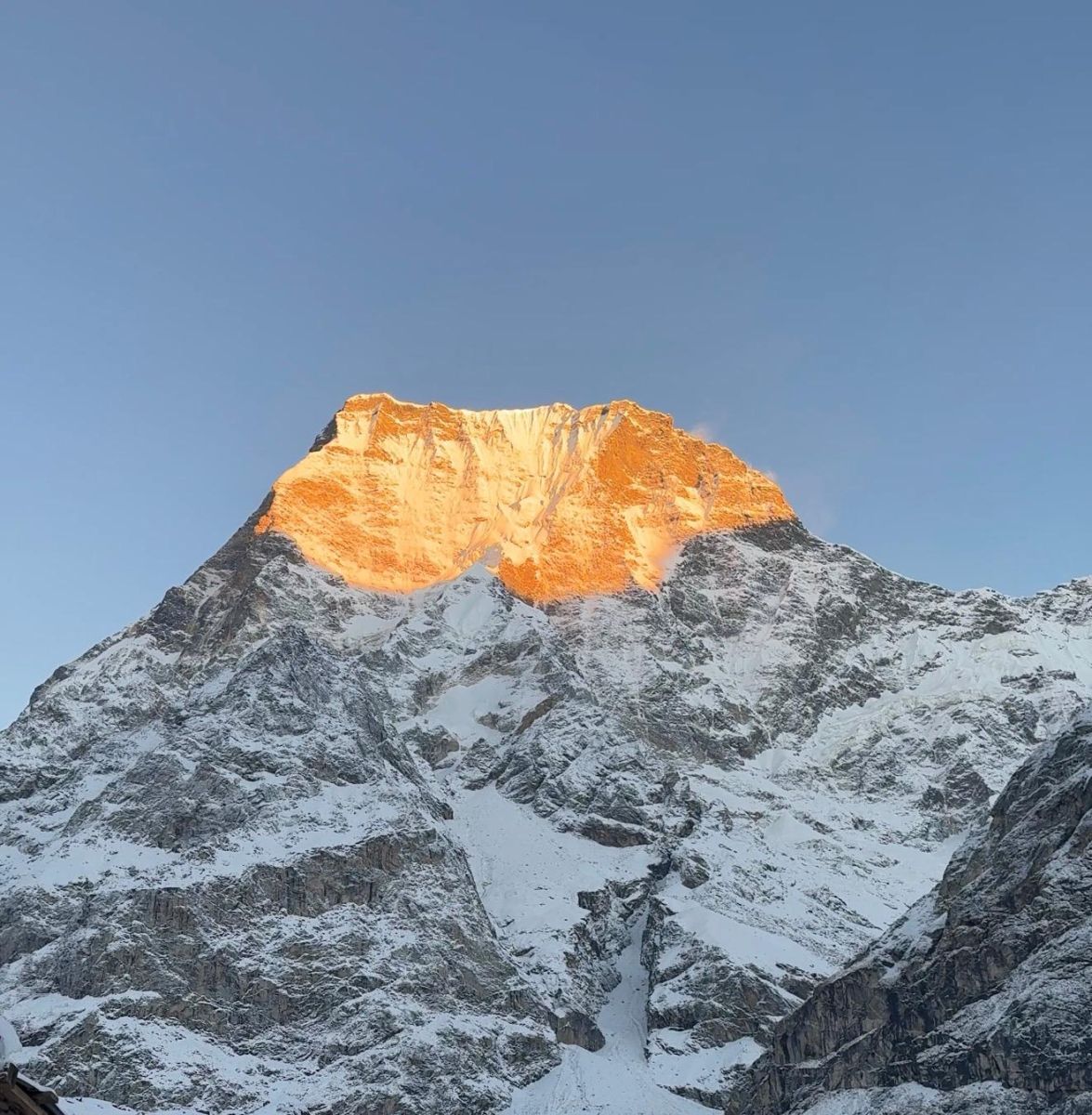 On the way down, we stopped again at Dhauli Odar for lunch. This time the sky was clear, and there stood a mountain I hadn't paid much attention to: KainyoKor Himal.
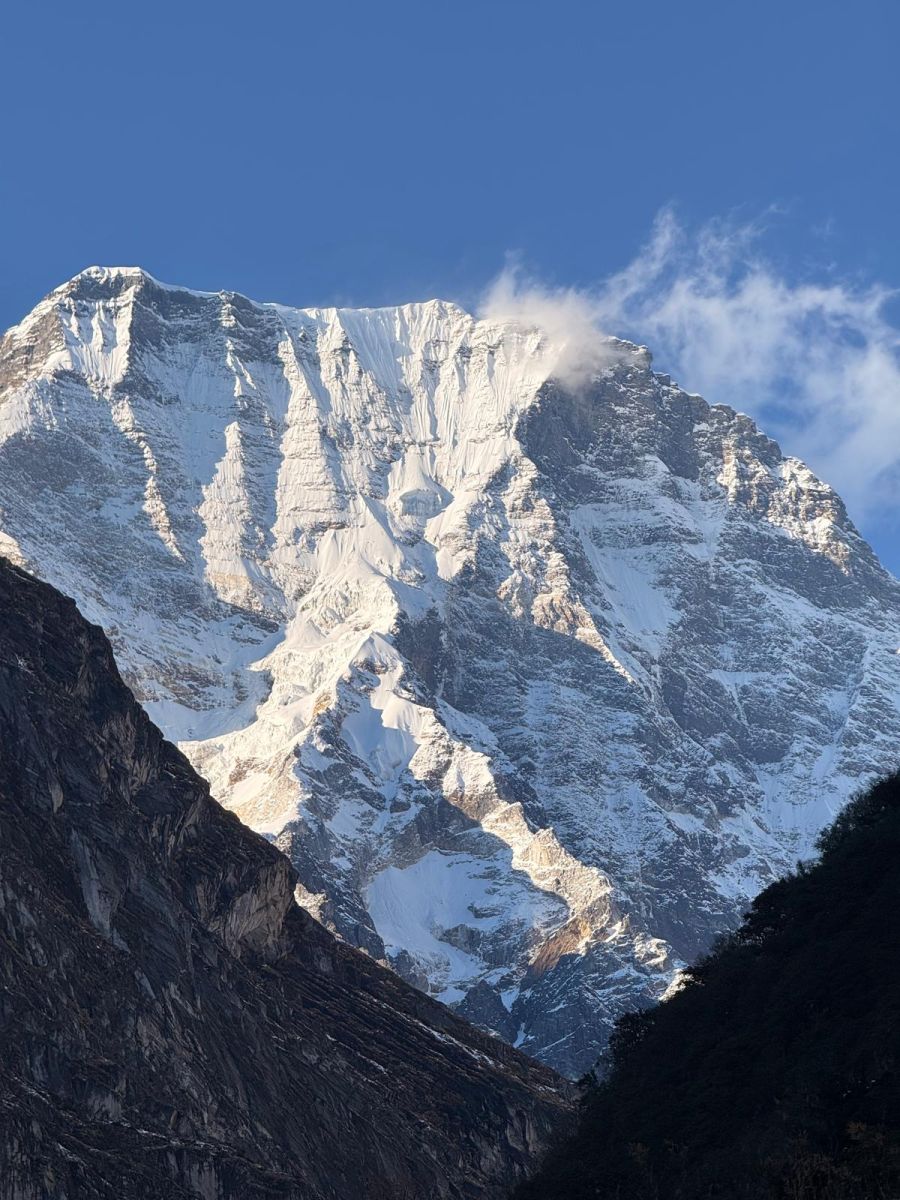
I couldn't stop looking at it. Something about its shape held me. I sat there for more than half an hour doing nothing but watching it. At that moment, I honestly found it more captivating than API.
It stays with you on the walk back towards Bhalle Khola. At times you have API on one side and KainyoKor on the other, two very different mountains in a single view. It is quite a sight.
KainyoKor is this region's hidden gem. If you are coming back from API, don't rush past it.
The people
We went for the mountains, but it's the people of Darchula I keep thinking about.
Homestay owners, hotel operators, guides, villagers: everywhere we went, we were treated with genuine kindness. The food was locally grown, delicious and fairly priced. We stayed in family-run places and got a feel for local life and tradition that you simply don't find in more commercial destinations.
Along the way we spoke with the Ward Chairperson and other local representatives, who were glad to talk about the area and its potential. We also met trekkers coming down from Base Camp. They all said much the same thing: raw, untouched, stunning.
When we left, one hotel owner sent our group off with garlands. It was a small gesture, and it meant a great deal.
What impressed me most was that the tourism we saw is run by people from Darchula. The community takes part directly, and the benefits stay local.
As someone from far-western Nepal, I felt proud watching my own people, language and culture welcome visitors this way. It didn't matter what your colour, gender, religion, caste or nationality was. Everyone got the same warmth and respect.
I have heard Nepali trekkers complain that in some of the country's better-known trekking regions, foreigners are given priority or locals are treated as lesser guests, sometimes with very different prices. I can't speak for every destination. But at API, we never felt that. As Nepalis, we were valued as much as anyone.
That may be API's greatest strength.
What API needs
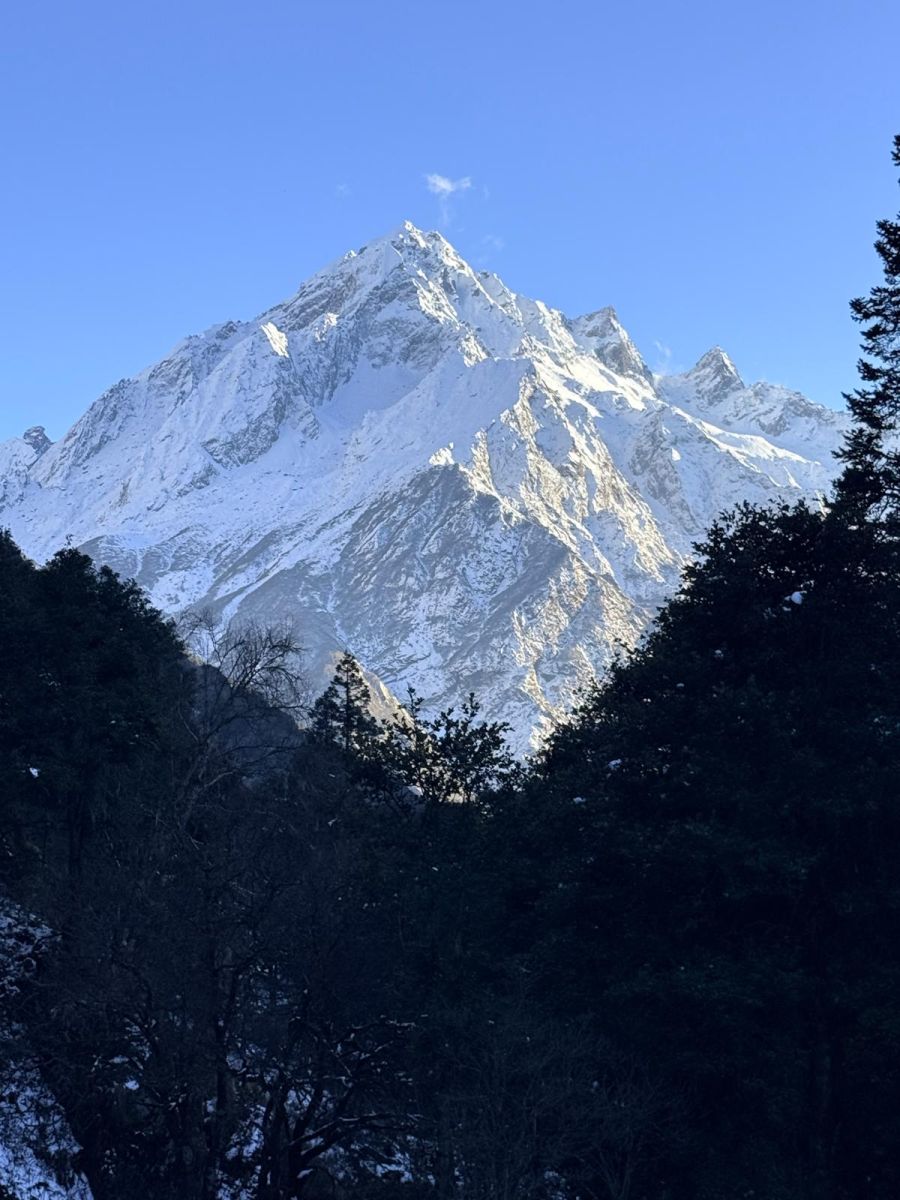 The trail was better than I had expected. Even so, API is a long way from reaching its potential, and that won't happen without government attention and investment.
Safety comes first. Government checkpoints at key points along the route could monitor trekking activity and help in emergencies, and a reliable rescue system would give many more visitors the confidence to come.
Second, accommodation. The existing homestays and hotels are doing admirable work with very little. But growth needs more options: more homestays, motels and hotels, including three-star and five-star properties for those who want more comfort. Not every visitor wants luxury, and local hospitality should stay at the heart of the place. A wider range would simply bring in travellers with different budgets and expectations.
Third, the road. The stretch from Gokle Bazar towards Kafaldhar, especially the section near Kafaldhar, needs to be blacktopped and improved. A better road would be safer and more comfortable, and would bring more people.
Finally, promotion. API sits close to India, and that is a huge opportunity. With better roads, rooms and marketing, Darchula could draw Indian tourists as well as international travellers entering Nepal through India.
None of this has to cost the region its environment or its character. Infrastructure can improve while the community keeps ownership. The aim should be responsible tourism: local jobs, support for small businesses, protection for the land, and benefits that reach the people who live in these mountains.
What I brought home
On the long walk out, I thought a lot about what we had been through.
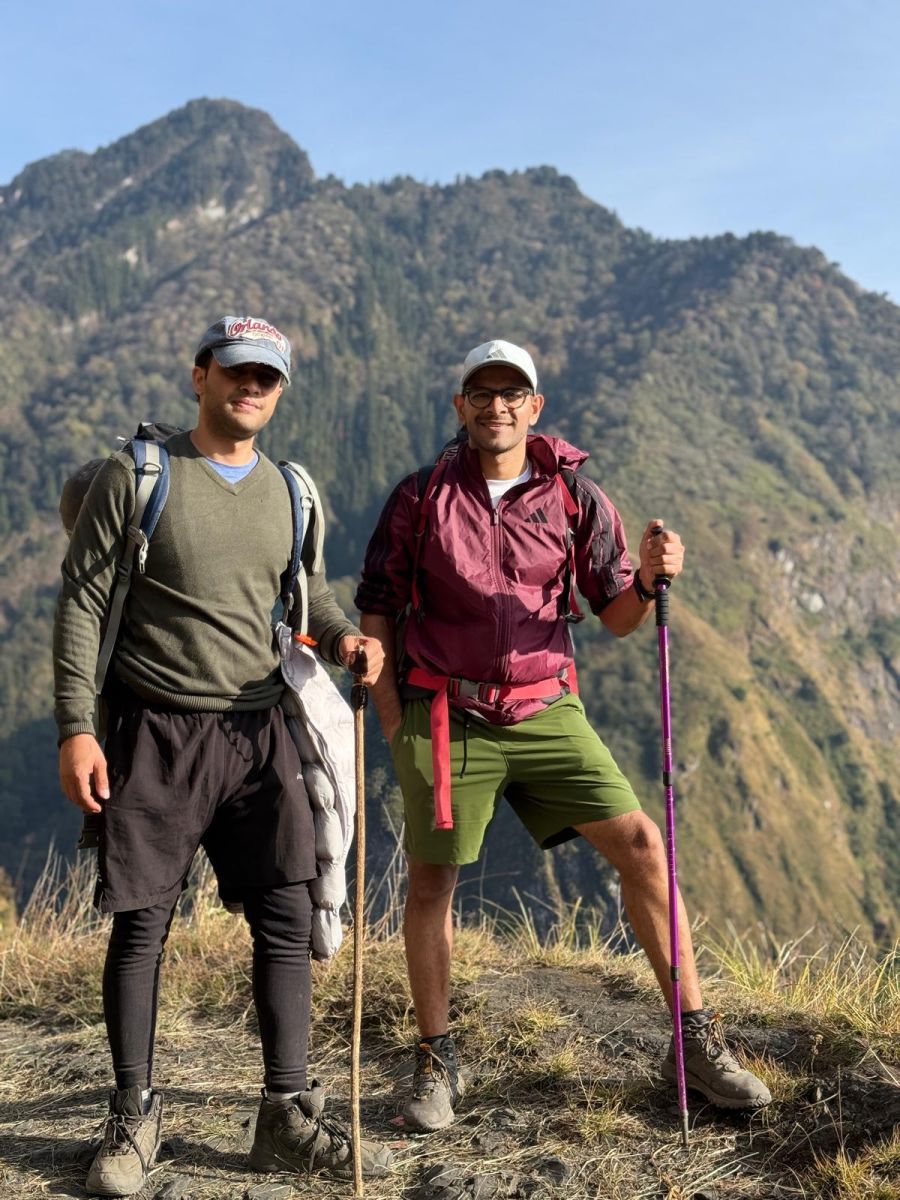
Waking up beside those mountains made me feel very small, in the best way. We spend so much of our lives chasing goals and handling responsibilities. Sometimes seeing the best of the natural world just takes a few more steps than we are used to.
Those steps are hard. The weather can turn. The facilities are basic. There are moments when turning back looks like the sensible choice.
But the memories last a lifetime.
I came home with photographs and drone footage, but also with a new appreciation for nature, for family, for simple living, and for the people of the place I come from.
If you are thinking about a Himalayan trek, my advice is simple: go to API.
And to my fellow people of Sudurpaschim: before you travel far in search of mountains, look at the treasure in your own backyard.
API isn't a box to tick on a trekking list. Its mountains are magnificent, its rivers and waterfalls are beautiful, and its trail is a real adventure. But it's the people who make you feel at home.
Sometimes you travel thousands of miles, only to find that one of the world's great treasures was waiting in your homeland all along.



तपाईको प्रतिक्रिया